

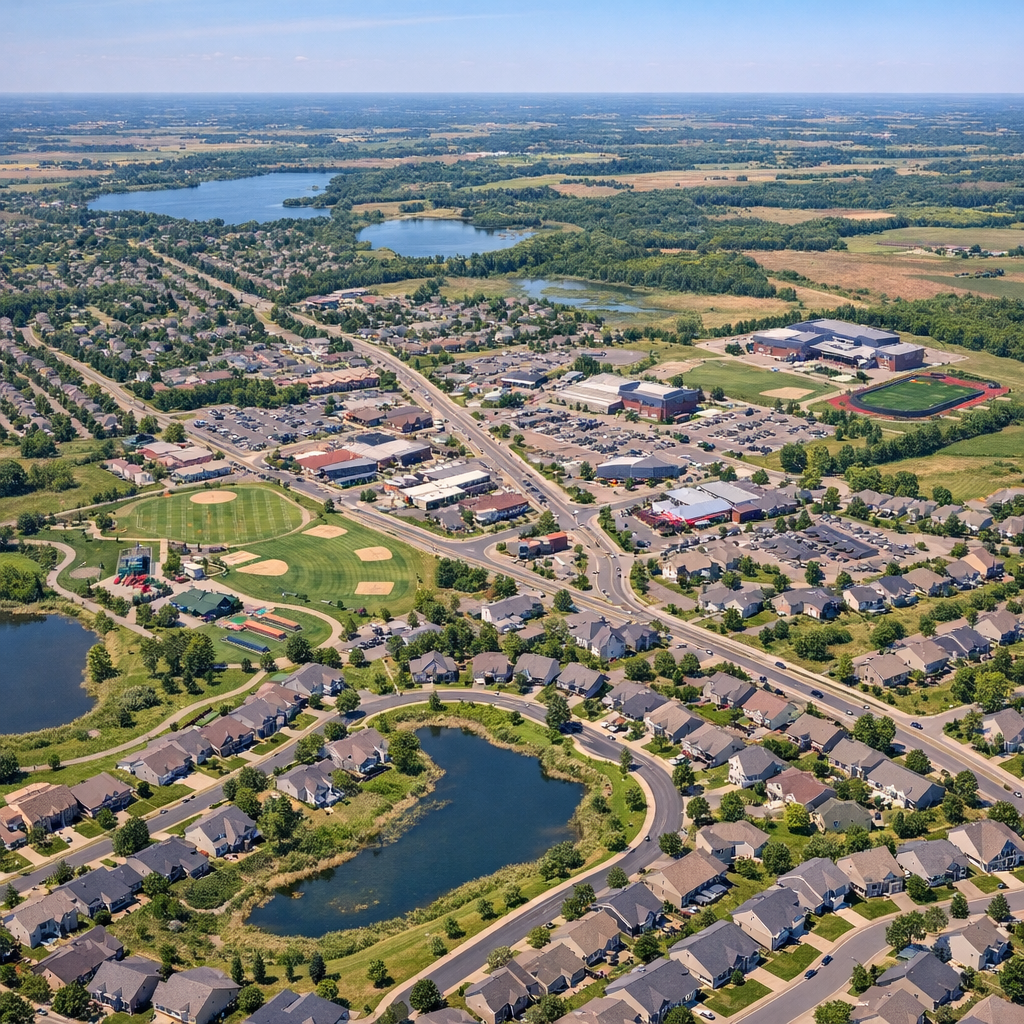
St. Michael, Minnesota, located approximately 30 miles northwest of Minneapolis, has experienced significant growth in recent years. As of 2026, the city’s population stands at 23,380, reflecting a 27.89% increase since 2020. This rapid expansion underscores St. Michael’s appeal as a desirable place to live and work.
Economic Indicators
The city’s economic health is evident in its median household income, which reached $131,274 between 2020 and 2024. This figure is notably higher than the national median, highlighting the area’s prosperity. Additionally, the poverty rate remains low at 3.2%, indicating a stable economic environment for residents.
Housing Market
St. Michael’s housing market has kept pace with its population growth. The median listing price for homes is $499,925, with a median sold price of $450,000. Homes typically spend 28 days on the market, suggesting a balanced demand between buyers and sellers. The rental market is also active, with a median rent of $2,447 per month, reflecting an 11.23% increase year-over-year.
Local Business Environment
The city’s strategic location near major highways and its proximity to the Minneapolis-Saint Paul International Airport make it an attractive destination for businesses. Industries such as manufacturing, healthcare, retail, technology, and agriculture thrive here. Notable companies, including Target, Cargill, 3M, Medtronic, and General Mills, have established a presence in the area, contributing to the local economy.
Local businesses like LADC, a full-service maintenance company, exemplify the entrepreneurial spirit in St. Michael. LADC serves clients across five states and employs a significant number of residents, particularly during the winter months when their workforce expands to around 180 full-time staff.
Community Development
The city has invested in community amenities to enhance residents’ quality of life. Town Center Park, developed near City Hall, features a state-of-the-art splash pad, shaded playground, large pavilion, and six pickleball courts. These investments not only provide recreational opportunities but also attract visitors, benefiting local businesses.
Challenges and Opportunities
Despite its growth, St. Michael faces challenges common to expanding communities. The city’s proximity to larger commercial hubs like Monticello, Elk River, Albertville, Rogers, and Maple Grove presents competition for attracting certain industries, such as large big-box retail. However, this also offers opportunities for local businesses to cater to niche markets and provide personalized services that larger retailers may overlook.
In conclusion, St. Michael’s economic landscape is characterized by robust growth, a strong median income, and a dynamic local business environment. Continued investment in community development and support for local enterprises will be crucial in sustaining this positive trajectory.