

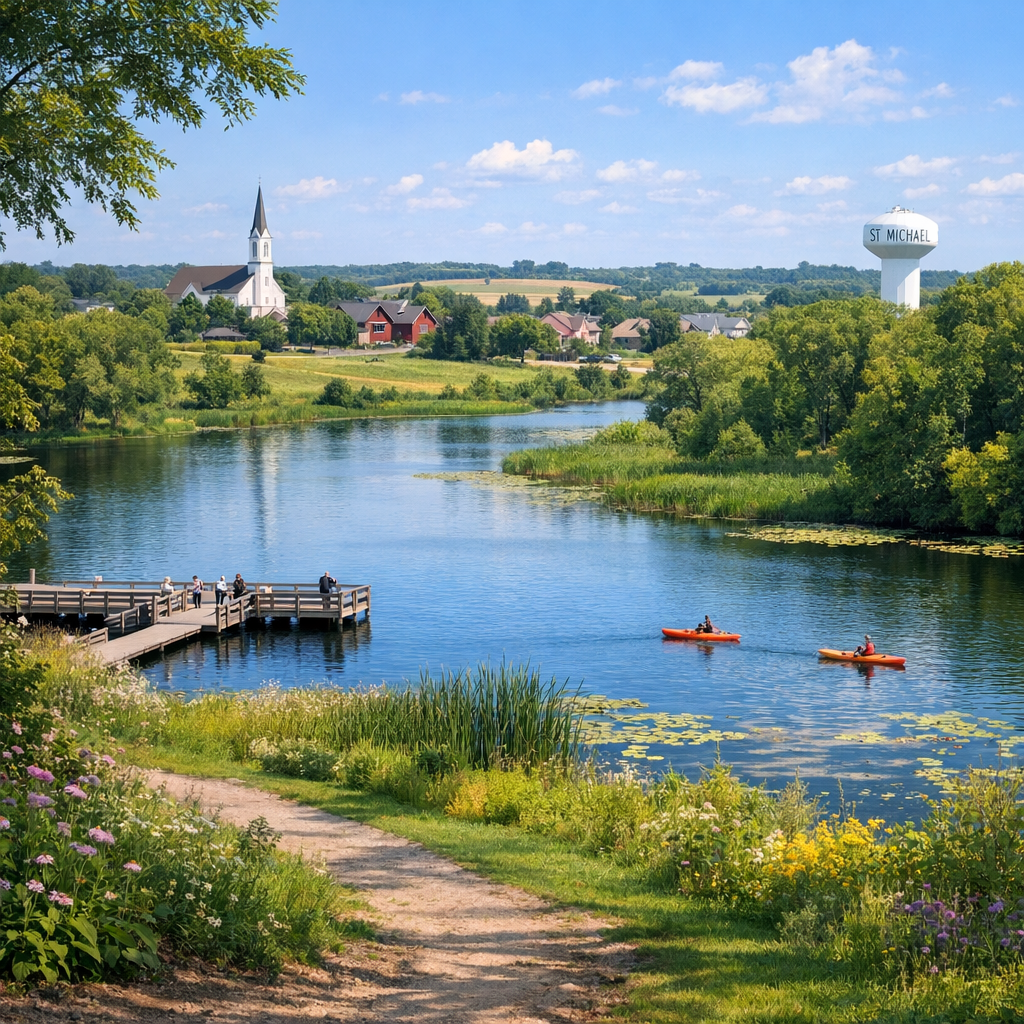
St. Michael, Minnesota, experiences a diverse climate characterized by distinct seasonal changes. Summers are typically warm and wet, with average high temperatures reaching 82°F in July. Winters are cold and snowy, with average lows around 7°F in January. The area receives approximately 30.9 inches of precipitation annually, including about 42.2 inches of snowfall.
Environmental Initiatives in St. Michael
The city is proactive in managing its natural resources and addressing environmental concerns. A key focus is stormwater management. Stormwater, which is runoff from rain or melting snow that doesn’t soak into the ground, can carry pollutants into local water bodies. To combat this, St. Michael has developed a Stormwater Pollution Prevention Plan (SWPPP) that includes public education, illicit discharge detection, and construction site runoff control.
Additionally, the city conducts Environmental Assessment Worksheets (EAWs) for proposed developments to evaluate potential environmental impacts. For instance, the Kohnen Property Residential Development underwent an EAW process to assess its environmental implications.
Protecting Local Water Bodies
St. Michael is home to several lakes and streams, some of which have been identified as impaired due to pollutants. Efforts are ongoing to monitor and improve the quality of these water bodies to ensure they meet environmental standards and provide safe habitats for wildlife.
Understanding the local climate and supporting environmental initiatives are crucial for the well-being of St. Michael’s residents and the preservation of its natural beauty.